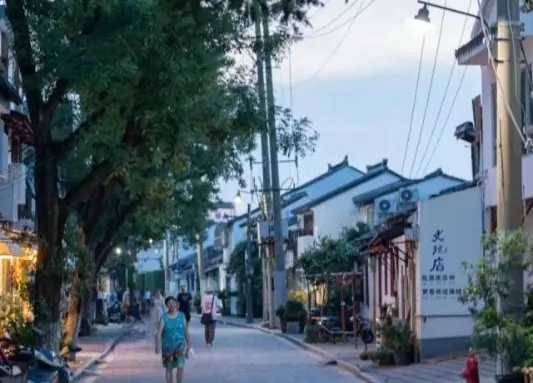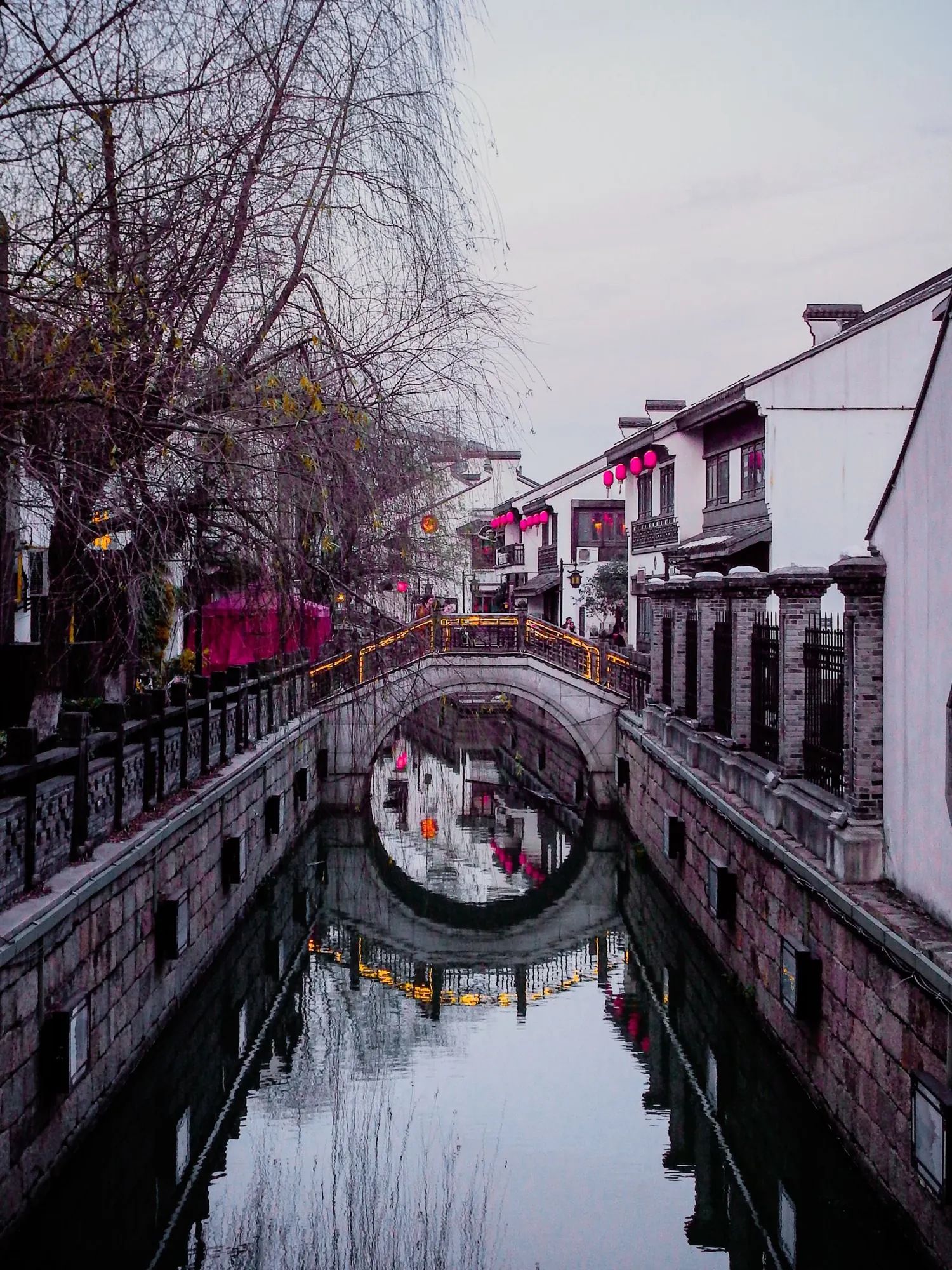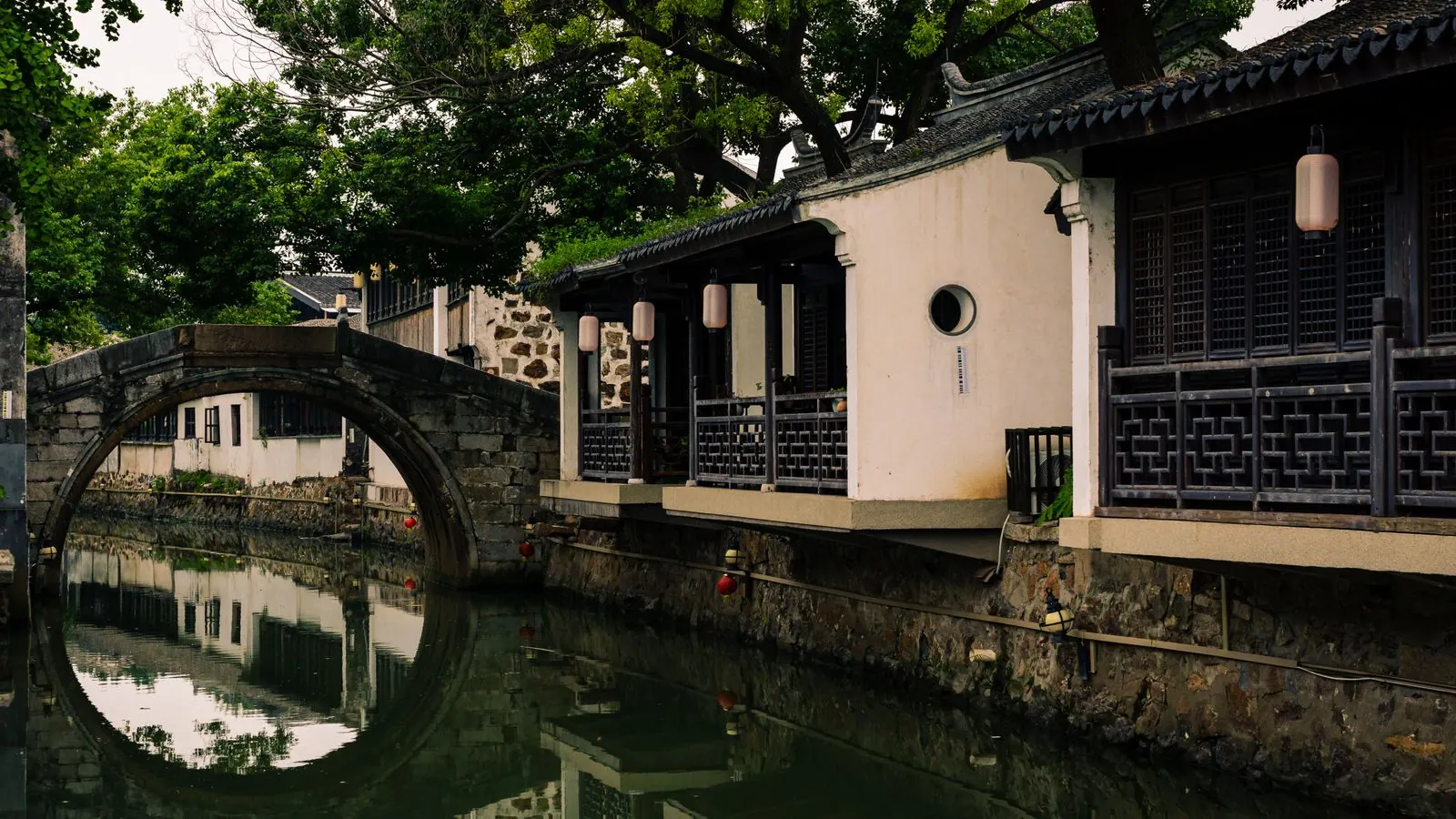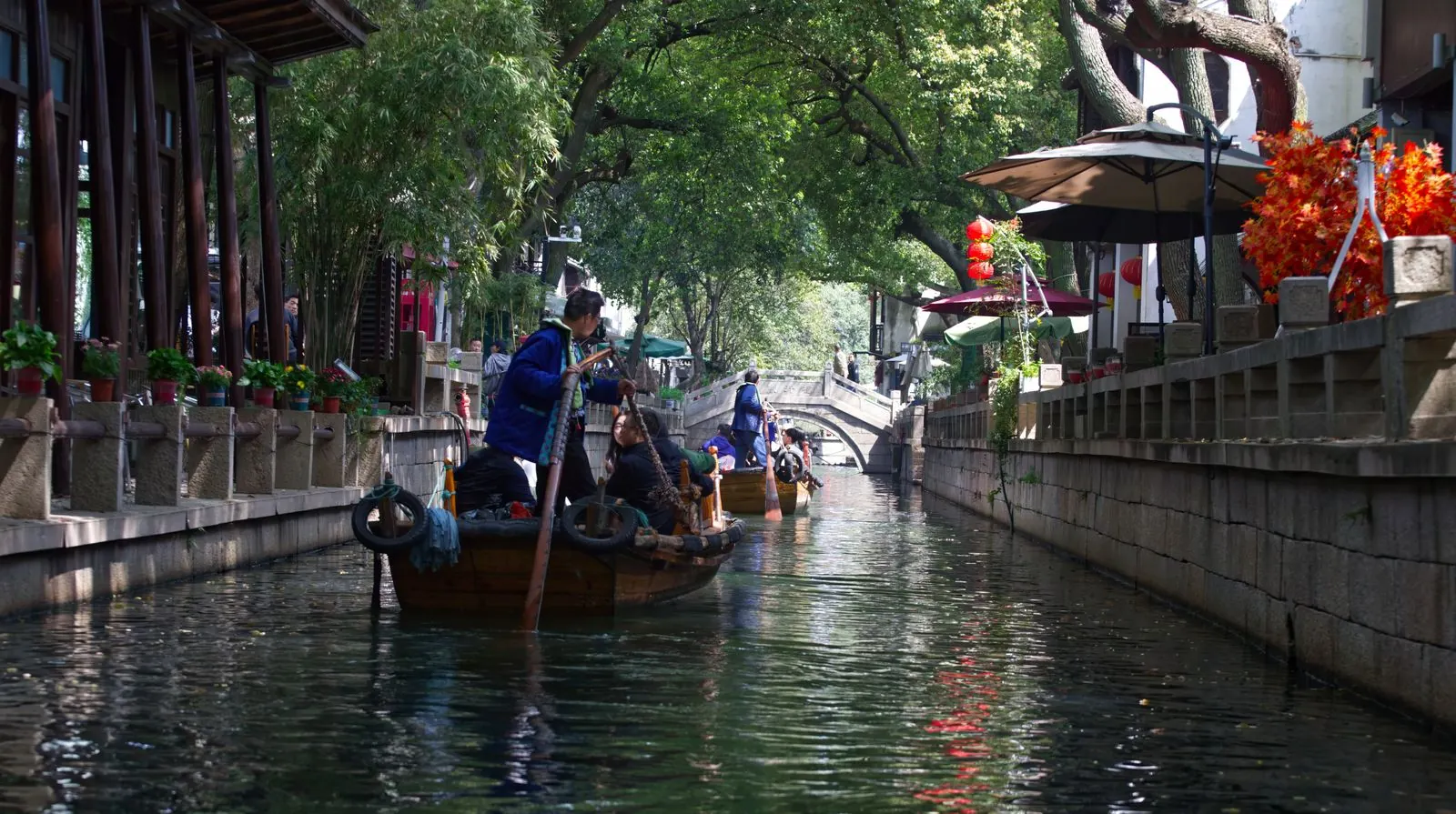
Pingjiang Road is the old city in one line: a canal parallel to the street, bridge after bridge, and five UNESCO-recognised traditions inside a single neighbourhood. The city has published an official 'reading the city' route — follow it.
Suzhou's old city is a grid of water and lanes, and Pingjiang Road is its clearest line. The canal runs beside the street rather than through it, crossed by small bridges that were the original neighbourhood connectors.
The official 'reading the city' walk starts at the south entrance and moves through a former scholar's residence, a secondhand bookshop, the kunqu and pingtan museums, and a cultural centre where you can hear a storyteller over tea. It is the most efficient half-day in the city.
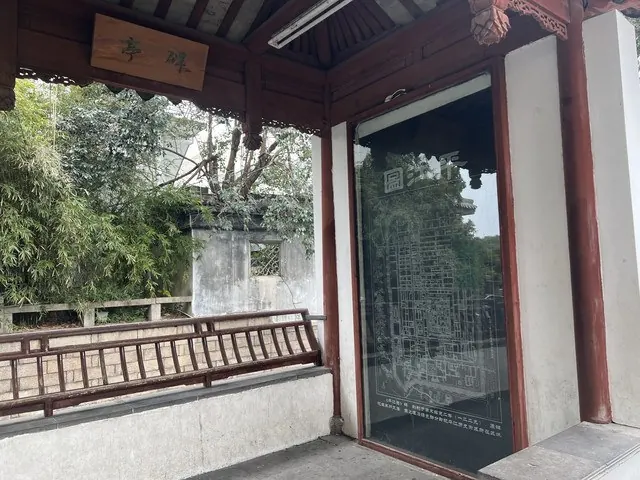
Begin at the stone map of Pingjiang, carved in the Song dynasty. It shows the city as a grid of canals and lanes — a plan you can still walk today. Keep the map in your head as you go.
The stone is the oldest surviving city plan of its kind in China. The pattern on it is still the pattern under your feet.

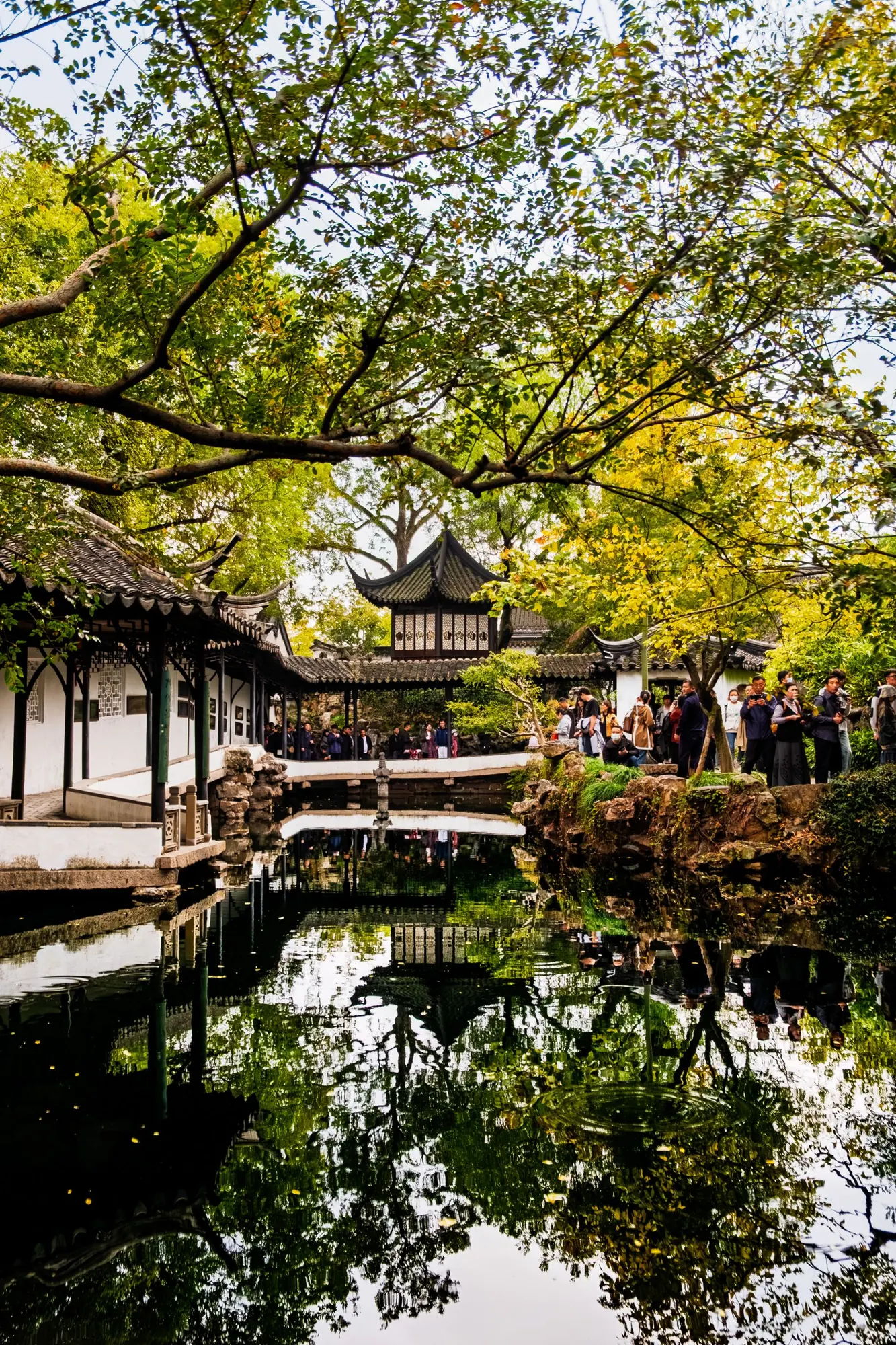
A former top scholar's residence and an old secondhand bookshop. This is the 'reading the city' theme in its most literal form — a street where books and official history occupy the same few metres.
The bookshop window is worth a stop even if you cannot read the spines.

Two museums face each other here: the Kunqu Museum and the Pingtan Museum. Between them sits the sound of the city — six-hundred-year-old theatre and the storytelling that filled its teahouses. Both are free and both explain what you will hear later if you book an evening performance.
The museum buildings are former guild halls. The acoustics were designed for exactly this music.

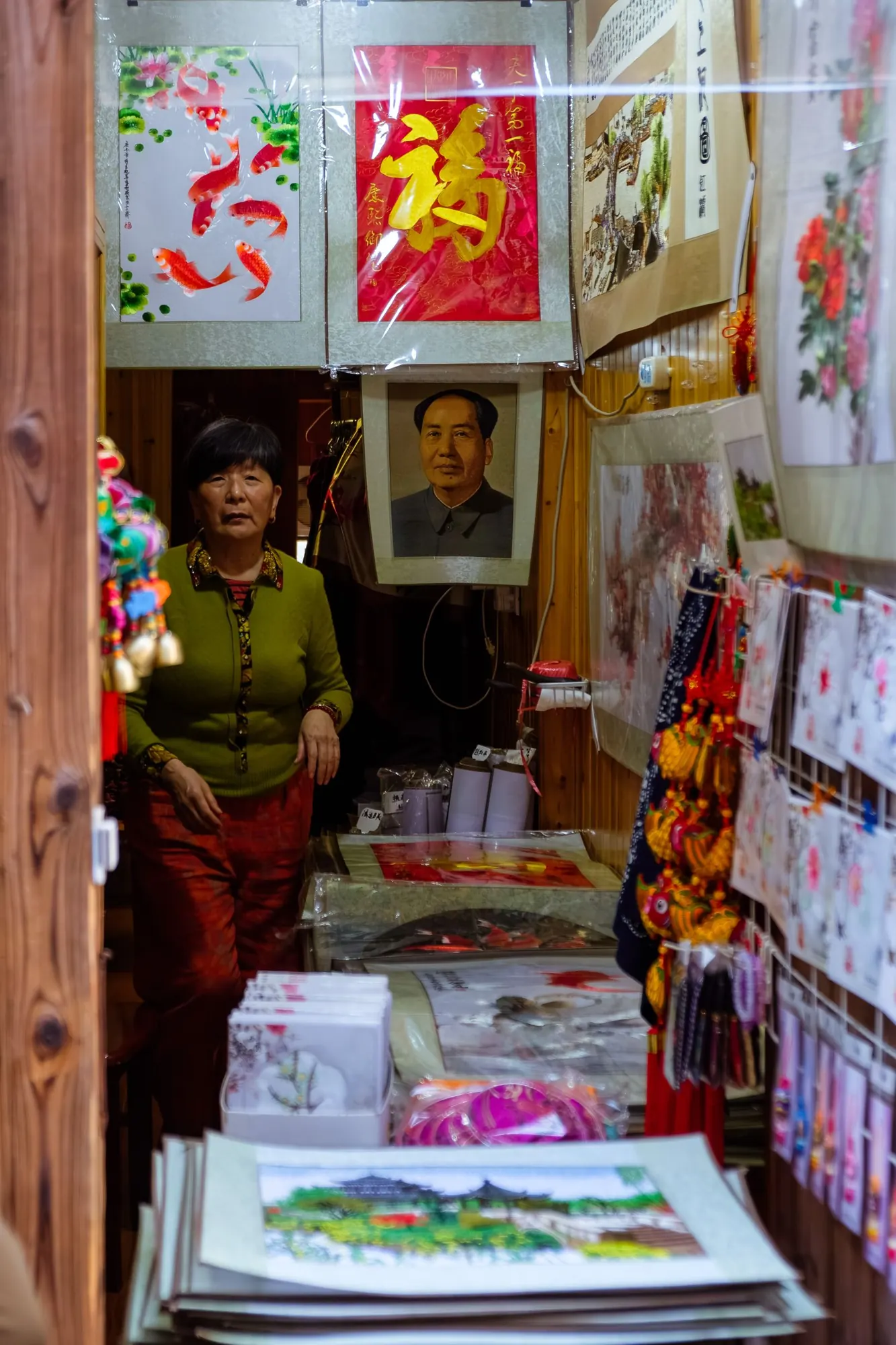
A restored old temple that now gathers several crafts under one roof — embroidery, kesi and New Year printing masters work alongside each other. Sit for tea and a short piece of pingtan. This is where the walk becomes an experience you can take home.
The same room holds the crafts our nine experiences are built around. Ask your companion to point out which table is which.

Finish by leaving the main street. Dingxiang and Xuanqiao lanes are quieter, with old walls and small doors, and this is where the city actually lives. You may pass someone selling white orchids for a few yuan — a Suzhou habit with no equivalent elsewhere.
The further you get from the main street, the slower people walk. Match their pace.

The cultural centre on this route is the starting point for several of our hands-on experiences — woodblock printing and kunqu are both steps away.
TRY TAOHUAWU WOODBLOCK PRINTING →